How Leak Detection Fits Into Modern Plumbing Services
Leak detection used to be treated as a side task, something a plumber handled after a stain appeared on a ceiling or a utility bill climbed high enough to get attention. That view no longer fits the way plumbing work happens in the field. Today, leak detection sits much closer to the center of modern plumbing services because it affects repairs, maintenance planning, emergency response, and customer decision-making across the whole system.
That shift is easy to understand once you look at how plumbing problems actually unfold. A small leak rarely stays small in its effects. It can push a water heater to cycle more often, keep a line under constant stress, complicate drain cleaning by masking the real source of moisture, or turn what looked like a simple fixture complaint into a broader sewer line repair question. On the commercial side, a hidden leak can disrupt operations, damage finishes, and create a chain of costs that goes far beyond the pipe itself.
For homeowners and property managers, leak detection is often the moment when a plumbing service call changes from guesswork to diagnosis. For the plumber, it is where experience matters most. The work is not only about finding water. It is about narrowing possibilities, reading symptoms correctly, and deciding what needs to happen now, what can wait, and what should be monitored.
Leak detection is not a separate trade from plumbing, it is part of good plumbing judgment
People often search for a plumber near me when there is visible water, a damp cabinet, a warm spot on the floor, or a slab leak concern. What they usually need is not only someone to repair the pipe after it is found. They need someone who can think through the plumbing system as a whole.
That distinction matters. Leak detection is not just a hunt for a wet spot. It involves understanding pressure behavior, fixture usage, shutoff isolation, equipment connections, and how one symptom can resemble another. A slow leak behind a wall can present like condensation. A water heater issue can be mistaken for a line leak. A drainage problem can make a customer think they have a supply leak because water appears where it should not.
Modern plumbing service has moved toward diagnosis first, repair second. That is a healthier model for the customer and the contractor. It reduces unnecessary wall openings, avoids replacing parts that were never the real problem, and builds https://arthurvdro750.clarionvale.com/posts/drain-cleaning-and-sewer-line-inspection-in-hilo a cleaner path from complaint to correction.
In practice, experienced plumbers often solve leaks by combining observation with elimination. They listen to the customer’s timeline, check when the issue occurs, isolate sections where possible, and compare what the building is doing under use and at rest. That kind of reasoning is the opposite of random trial and error. It is what separates a true service diagnosis from a patch job.
Why leak detection now drives so many service calls
A plumbing system touches nearly every part of a property that people rely on daily. Because of that, leaks now show up in many different service categories instead of one neat bucket labeled “pipe repair.”
A customer may call about water heater repair because the area around the tank is wet, only to learn the source is an adjacent connection or valve. Another may schedule drain cleaning after noticing recurring moisture and odor near a fixture, when the actual issue involves a leak condition that needs a different repair path. A property owner worried about sewer line repair may first notice lawn saturation or unexplained dampness and need a careful diagnosis before committing to major work.

This is one reason leak detection has become more central. It influences scope. If you misread the cause, everything downstream in the service call can go wrong, from the quoted work to the materials ordered to the timeline the customer expects.
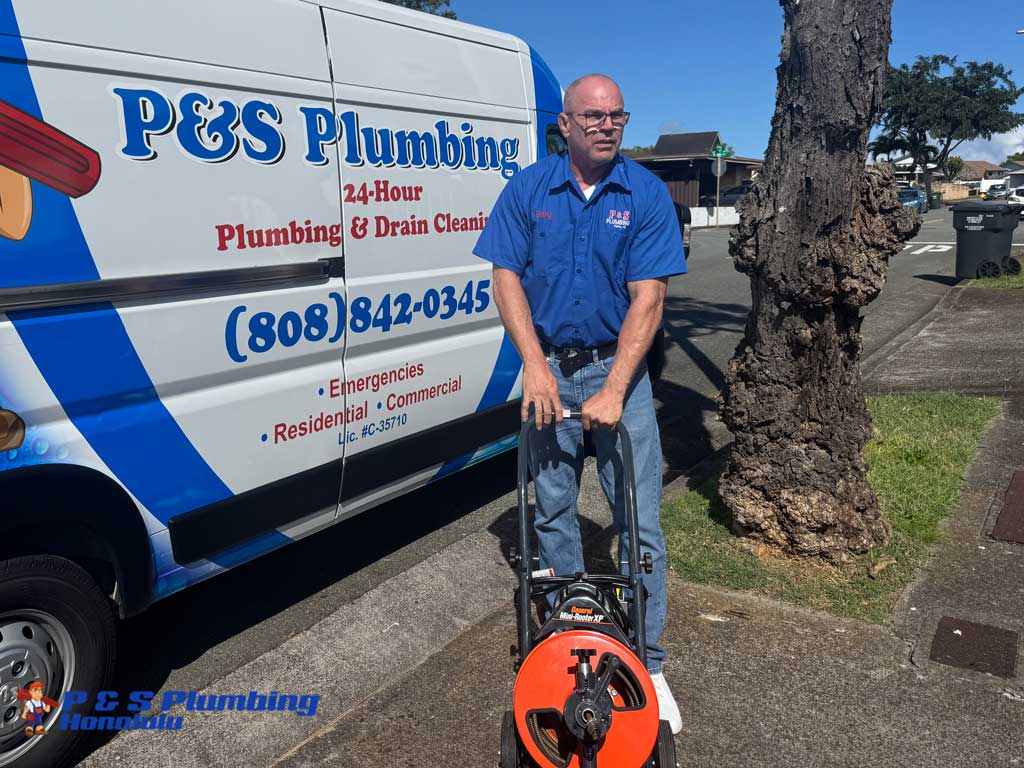
There is also a practical business reason. Customers today expect a plumber to evaluate the full context of the problem, not only the most obvious symptom. If a Hilo plumber is called to a house for a leak complaint, that visit may involve checking supply lines, fixture performance, water heating equipment, exterior run conditions, and whether another service such as drain cleaning is actually more urgent. The trade increasingly rewards that broader diagnostic view.
The difference between visible leaks and hidden leaks
Visible leaks are the easy cases, though even they can be deceptive. Water under a sink, dripping from a valve, or pooling near a toilet gives the plumber a starting point. The work then becomes confirmation, repair, and checking for secondary damage or related weakness. In those situations, the value of leak detection lies in making sure the obvious source is truly the only one.
Hidden leaks are where modern plumbing service earns its keep. A customer may only know that something feels off. The water bill looks wrong. Paint bubbles. Flooring lifts slightly. A wall smells musty. The water heater seems to run more often than usual. There may be no dramatic burst, just a slow change in how the building behaves.
Those jobs require patience. Hidden leaks are often found not by one dramatic sign, but by several smaller clues that line up. Good plumbers pay attention to sequence. Did the issue begin after another repair? Does it appear only when hot water is used? Does it stop when a specific fixture is isolated? Does moisture show up after a shower, after laundry, or all the time? Those distinctions help separate a branch line leak from a fixture seal problem or an equipment connection issue.
The trade-off is time. Customers understandably want a quick answer, especially when damage is already visible. But the fastest response is not always the smartest one. Opening the wrong wall is expensive. Replacing a water heater when the leak is really at nearby piping is worse. Leak detection adds value because it protects against those expensive wrong turns.
Leak detection and emergency plumbing are closely connected
An emergency plumber is often called because water is active, damage is spreading, or the customer has lost confidence that the issue can wait. In those moments, leak detection becomes triage. The first objective is containment. The second is identifying the source well enough to stabilize the property and set the right repair plan.
This is where experience counts more than speed alone. Not every emergency requires immediate invasive work, and not every small-looking leak is safe to postpone. A pinhole drip over a finished ceiling may deserve faster action than a more obvious leak in an unfinished utility area, simply because of what sits below it. Likewise, a leak tied to hot water equipment may call for a different sequence than one tied to a cold supply branch.
Emergency service also exposes one of the real strengths of integrated plumbing companies. A contractor that handles leak detection as part of broader plumbing work can move from diagnosis to repair without handing the customer off to a separate specialty. That continuity is useful when time matters. It is also useful when the leak turns out to involve related services such as water heater repair or a sewer line repair investigation.
In Hilo and elsewhere, many service calls start with urgency but end with a calmer, more measured repair once the source is identified. That is the ideal outcome. The customer gets quick protection from damage, then a repair plan grounded in actual evidence rather than panic.
Water heater problems often begin with leak questions
Water heaters are a good example of why leak detection belongs inside a modern service model. Customers frequently notice moisture around the unit before they know whether the heater itself is at fault. The problem could be the tank, a connection, a valve, or another nearby plumbing issue that only appears to be a heater failure.
That is why water heater repair and leak detection often overlap. A thoughtful plumber does not assume every puddle at the heater means replacement. First, the source has to be identified. Then the condition of the equipment can be weighed against the likely cost and durability of a repair.

The same reasoning applies to solar water heater repair. Where solar equipment is part of the plumbing setup, leak complaints can become more layered because there may be multiple components and connections to evaluate. Customers may focus on the visible area where water appears, but the actual problem can be elsewhere in the connected system. Good diagnosis protects the customer from paying for repairs in the wrong location.
This is one of the more practical benefits of modern leak detection. It helps preserve equipment when replacement is not warranted, and it prevents false optimism when a small-seeming leak is really a sign of broader failure. Neither extreme serves the customer well.
Drain cleaning, sewer work, and leak detection often overlap in unexpected ways
Drainage complaints have a way of confusing the picture. Water where it does not belong makes people think “leak,” and sometimes they are right. Other times, the issue is poor drainage, a backup, or a sewer problem presenting at the lowest visible point.
That is why drain cleaning and leak detection should never be handled in isolation from one another. If a customer reports repeated moisture, odor, or wetness around fixtures, an experienced plumber has to decide whether the water is escaping from a pressurized supply line, failing to drain properly, or surfacing from a sewer issue. The correction path for each is different, and the cost difference can be significant.
Sewer line repair raises the stakes even more. Before anyone commits to major work, the diagnosis has to match the symptoms. Moisture outdoors, recurring wet zones, or water appearing in odd places can suggest serious underground issues, but those signs still need careful interpretation. Jumping too quickly to a sewer line conclusion is risky. So is dismissing repeated symptoms as minor when they point to something larger.
A strong service plumber understands the relationships among these categories. Leak detection is often the entry point, but the final solution may land in drain cleaning, targeted repairs, or a larger sewer line repair plan. Customers benefit when the contractor sees those connections early.
Commercial properties raise the standard
A commercial plumber approaches leak detection with different constraints than a residential service call, even when the basic principles are the same. Occupancy is higher, usage patterns are heavier, and downtime carries a cost that can exceed the repair itself. Water where it should not be can affect tenants, customers, inventory, finished spaces, and daily operations.
That changes the conversation. In a commercial setting, leak detection is not only about finding the source. It is about sequencing work around access, minimizing disruption, and deciding whether a temporary stabilization is acceptable until a fuller repair window opens. The diagnostic process has to be efficient, but also defensible.
Commercial work also tends to expose the importance of documentation and scope clarity. If a leak affects several units or a shared area, the plumber needs to communicate what is known, what remains uncertain, and what the next investigative step will achieve. The best commercial plumbers are disciplined about this. They understand that vague findings create friction later.
This is another reason modern plumbing services treat leak detection as a core skill rather than an add-on. On commercial jobs, a weak diagnosis can trigger tenant complaints, repeat visits, and disputes over responsibility. A solid diagnosis saves everyone time.
Local licensing matters, especially in Hawaii
Customers sometimes focus so hard on speed that they overlook qualifications. That is a mistake, particularly when leak detection leads directly into active plumbing work. In Hawaii, a plumber’s license is required for anyone performing plumbing work, and the state provides a public system through the Department of Commerce and Consumer Affairs so consumers can verify license status. That system allows people to check active status, original licensure dates, expiration dates, and disciplinary history.
For customers hiring a Hilo plumber, that is more than a formality. Leak detection can quickly turn into repair decisions involving supply lines, fixtures, water heaters, or larger system work. A licensed professional is accountable to the standards and renewal requirements set by the state. Hawaii’s Board of Electricians and Plumbers handles plumber licensing, renewals, and continuing competency requirements, and licensed plumbers on active status must complete continuing competency based on the 2021 Uniform Plumbing Code for the July 1, 2024 to June 30, 2027 renewal period.
That matters because diagnosis is not separate from competence. A contractor who understands the code environment and keeps current with renewal requirements is better positioned to make sound repair calls. For property owners, checking license status is a practical step, not a bureaucratic one.
What customers should expect from a modern leak detection visit
A good leak detection appointment should feel structured, even if the problem is messy. The plumber should ask focused questions, inspect the most likely zones, and explain the difference between what is confirmed and what is still a possibility. If access limits the diagnosis, that should be stated plainly. If the issue points toward another service category, such as water heater repair, solar water heater repair, drain cleaning, or sewer line repair, the reasoning should be clear.
Customers should also expect some restraint. Not every reputable plumber promises an instant answer in every hidden leak case, because some systems require staged diagnosis. That is not hesitation. It is professionalism. The point is to avoid unnecessary demolition, unnecessary replacements, and false certainty.
A helpful way to judge the quality of the visit is to listen for how the plumber talks through trade-offs. If a repair can be done immediately but further monitoring is wise, that should be explained. If a temporary fix is possible but carries limits, that should be explained too. Strong service plumbing is often less about dramatic discoveries and more about clear, practical judgment.
Here are a few signs that the process is being handled well:
- The plumber distinguishes between confirmed leak sources and likely but unconfirmed causes.
- Related systems are considered, especially when the symptom could involve drainage, sewer, or water heating.
- Repair options are discussed in terms of access, urgency, and likely durability.
- License status and professional accountability are easy for the customer to verify.
- The visit ends with a specific next step rather than a vague recommendation to “keep an eye on it.”
Leak detection has become a gateway service
One of the clearest changes in the trade is that leak detection now often opens the door to a broader service relationship. A homeowner may start with a mystery moisture problem and end up addressing aging shutoffs, a struggling water heater, or a neglected drain line. A commercial customer may call over a recurring leak and discover a maintenance issue that has been affecting multiple spaces.
That does not mean plumbers should upsell every leak call into a larger project. It means leak detection reveals system truth. Once the real condition is visible, both the contractor and the customer can make better choices.
This is where experienced plumbers earn trust. They know when a leak is isolated and when it signals a pattern. They know when immediate repair is enough and when a larger conversation is warranted. They know that the right answer is not always the biggest ticket, nor the cheapest patch. It is the repair strategy that fits the evidence, the building, and the customer’s tolerance for risk.
For anyone searching terms like plumber near me, emergency plumber, or commercial plumber, that is the standard worth looking for. Leak detection is no longer just a technical service hidden inside a repair call. It is the diagnostic backbone that helps modern plumbing work make sense.
The real value is not just finding the leak
Finding the source matters, of course, but the larger value is what comes after. A proper diagnosis shapes the repair, protects adjacent systems, and gives the customer a reasoned basis for action. It can prevent the wrong wall from being opened, the wrong equipment from being replaced, or the wrong category of service from being ordered.
That is why leak detection fits so naturally into modern plumbing services. It touches residential and commercial work. It supports emergency response. It sharpens decisions around water heater repair, solar water heater repair, drain cleaning, and sewer line repair. It rewards licensed, current, professionally accountable plumbers who can interpret symptoms instead of merely reacting to them.
At its best, leak detection is not dramatic. It is disciplined. It is careful. It is what turns a plumbing problem from a frustrating mystery into a repair plan that actually holds up.
Name: P&S Plumbing Hilo
Address: 879 Manono St B, Hilo, HI 96720, United States
Phone: 808-935-3892
Website: https://www.psplumbinghawaii.com/locations/hilo/
Email: [email protected]
Hours:
Sunday: Open 24 hours
Monday: Open 24 hours
Tuesday: Open 24 hours
Wednesday: Open 24 hours
Thursday: Open 24 hours
Friday: Open 24 hours
Saturday: Open 24 hours
Time zone: Hawaii-Aleutian Time
Open-location code / Plus code: PW6J+35 Hilo, Hawaii, USA
Map/listing URL: https://www.google.com/maps/search/?api=1&query=Google&query_place_id=ChIJ4Wwh4jGFTIQRdIh8RLXElbM
Embed iframe:
Socials:
https://web.facebook.com/psplumbinghilo/
https://www.instagram.com/psplumbinghilo
https://ph.pinterest.com/psplumbinghilo/
https://x.com/psplumbinghilo
https://www.linkedin.com/in/psplumbinghilo
P&S Plumbing Hilo provides plumbing services from its Hilo location on Manono Street.
The official Hilo page lists plumbing support for Hilo and surrounding communities, with Hilo phone service available at 808-935-3892.
P&S Plumbing provides residential plumbing, commercial plumbing, drain cleaning, sewer-line service, water heater work, plumbing repairs, leak detection, fixture repair, bathroom plumbing, kitchen plumbing, and emergency plumbing support.
The official contact page lists the Hilo location at 879 Manono St, Unit B, Hilo, HI 96720.
The company’s official site lists Hawaii State License Number CT-35710 and describes P&S Plumbing as licensed and insured.
Customers can contact P&S Plumbing Hilo for clogged drains, sewer-line concerns, water heater service, plumbing leaks, fixture repairs, toilet issues, kitchen plumbing, bathroom plumbing, commercial plumbing, residential plumbing, and urgent plumbing requests.
For plumbing service in Hilo and East Hawaii, call 808-935-3892 or visit https://www.psplumbinghawaii.com/locations/hilo/
The supplied public map listing uses plus code PW6J+35 Hilo, Hawaii, USA and can help customers find P&S Plumbing Hilo near Manono Street.
Popular Questions About P&S Plumbing Hilo
What does P&S Plumbing Hilo provide?
P&S Plumbing Hilo provides plumbing services for residential and commercial customers, including drain cleaning, sewer and drain service, water heater service, plumbing repairs, fixture repair and installation, leak detection, bathroom plumbing, kitchen plumbing, and emergency plumbing.
Where is P&S Plumbing Hilo located?
The official contact page lists the Hilo location at 879 Manono St, Unit B, Hilo, HI 96720.
What phone number should Hilo customers call?
The official website lists Hilo phone number 808-935-3892.
What is the email address for P&S Plumbing Hilo?
What are P&S Plumbing Hilo’s hours?
The listing hours show P&S Plumbing Hilo as open 24 hours a day, seven days a week, Hawaii-Aleutian Time. Customers should call 808-935-3892 to confirm service availability for urgent needs.
Is P&S Plumbing licensed?
The official Hilo page lists Hawaii State License Number CT-35710. Customers can confirm license status directly with the relevant Hawaii licensing authority before hiring.
Does P&S Plumbing Hilo offer emergency plumbing?
Yes. The official Hilo page references emergency services, and the supplied listing shows 24-hour availability.
Does P&S Plumbing Hilo handle water heaters?
Yes. P&S Plumbing’s official site lists water heater repair and installation services, including service for the Big Island and Hilo.
What areas does P&S Plumbing serve from Hilo?
The official site lists service for Hilo and surrounding areas, with broader P&S Plumbing service across the Big Island and Oahu.
How do I contact P&S Plumbing Hilo?
Call 808-935-3892 or visit https://www.psplumbinghawaii.com/locations/hilo/. Social profiles: Facebook, Instagram, Pinterest, X, and LinkedIn.
Landmarks Near Hilo, HI
Manono Street: The street listed for P&S Plumbing Hilo and a practical reference point for the Hilo location.
Kamehameha Avenue: A major Hilo waterfront route connecting downtown, commercial areas, and local service corridors.
Hilo Bayfront: A central Hilo waterfront landmark near downtown businesses and residential areas.
Downtown Hilo: A major East Hawaii business, civic, and residential district served by local plumbing contractors.
Hilo Farmers Market: A well-known downtown Hilo landmark and local reference point.
Hilo Harbor: A major commercial harbor and industrial-area landmark near Hilo service routes.
Prince Kūhiō Plaza: A major Hilo shopping landmark near residential and commercial areas.
University of Hawaiʻi at Hilo: A major education landmark serving the Hilo area.
Hawaiʻi Community College: A local education landmark near central Hilo routes.
Hilo International Airport: A major East Hawaii transportation landmark near commercial and residential service areas.
Liliʻuokalani Gardens: A well-known Hilo park and waterfront landmark near Banyan Drive.
Banyan Drive: A recognizable Hilo hotel and waterfront corridor close to Hilo Bay.
Wailuku River State Park: A major natural landmark near Hilo, including Rainbow Falls and nearby residential areas.
Panaʻewa Rainforest Zoo and Gardens: A Hilo-area landmark southeast of downtown.
Keaukaha: A coastal Hilo community with homes, parks, and local plumbing service needs.
For residential plumbing, commercial plumbing, drain cleaning, sewer-line repair, water heater service, leak detection, fixture work, bathroom plumbing, kitchen plumbing, or emergency plumbing near these Hilo and East Hawaii landmarks, contact P&S Plumbing Hilo at 808-935-3892 or visit https://www.psplumbinghawaii.com/locations/hilo/